
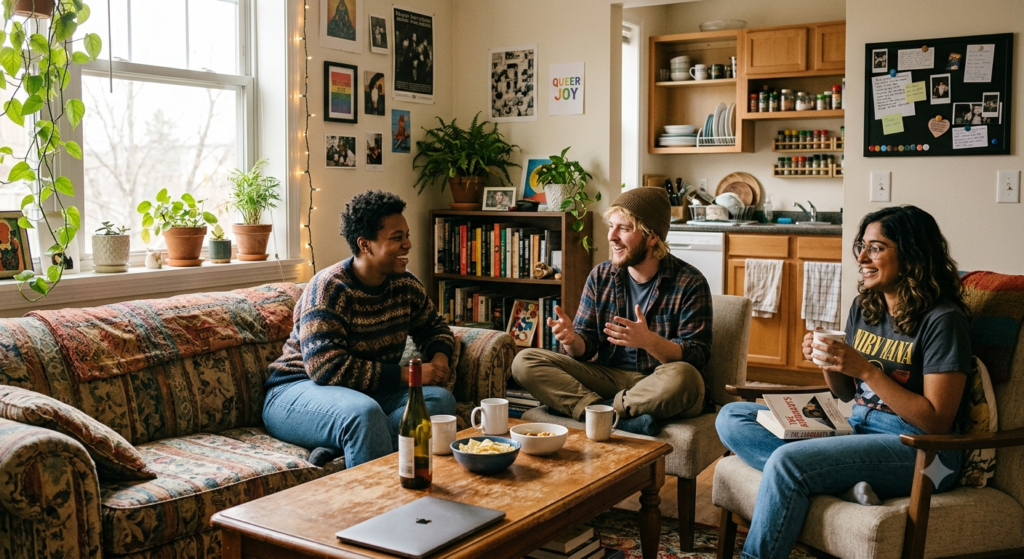
Sharing a home can be a great way to make housing more affordable, but anyone who has lived with a roommate knows there’s more to it than dividing the rent and deciding who buys toilet paper.
A good roommate relationship is built around compatibility, communication, respect, and a shared understanding of what makes a home comfortable for everyone.
For LGBTQ+ renters, there can also be an added layer to consider: finding a living situation where you can be yourself without constantly worrying about judgment, awkward questions, or feeling like you have to hide an important part of your life.
So, what actually makes someone a great roommate?
Respect Comes First
You don’t have to share the same interests, personality, or lifestyle to live well together.
What matters is mutual respect.
A great roommate understands that everyone has their own routines, relationships, boundaries, and personal space. They don’t make assumptions about you, and they don’t treat differences as a problem that needs to be explained or defended.
Respect can be as simple as asking before using someone’s belongings, keeping noise at a reasonable level, or understanding when your roommate needs some privacy.
Communication Prevents Small Problems From Becoming Big Ones
Most roommate problems don’t start as major conflicts.
Someone leaves dishes in the sink. The living room gets noisy late at night. The thermostat keeps getting changed. One person thinks they’re cleaning more than the other.
If nobody talks about it, frustration builds.
Good roommates communicate early and directly. That doesn’t mean every conversation has to become a serious house meeting. Sometimes a simple, “Hey, would you mind cleaning up the kitchen after you cook?” is enough.
Being comfortable having those conversations can make shared living much easier.
Lifestyle Compatibility Matters
Two perfectly nice people can still be terrible roommates.
One person may love having friends over several nights a week. Another may prefer a quiet home. One may stay up until 2 a.m., while the other starts work at 6 a.m.
Neither person is necessarily wrong. They simply have different lifestyles.
Before moving in together, it’s worth talking about things such as:
- Work and sleep schedules
- Guests and overnight visitors
- Pets
- Smoking or vaping
- Drinking and recreational activities
- Noise levels
- Cleaning habits
- Shared spaces
- Food and groceries
- Expectations around privacy
These conversations might feel a little awkward at first, but they’re considerably easier than dealing with major disagreements after you’ve signed a lease.
LGBTQ+ Compatibility Can Mean Different Things to Different People
Being LGBTQ+ doesn’t automatically mean two people will be compatible roommates.
That’s an important point.
Someone may want a roommate who is also gay, while someone else may simply want a roommate who is LGBTQ+-friendly and respectful. Others may prioritize lifestyle, location, budget, age, pets, or work schedule above everything else.
There’s no single definition of the “right” roommate.
What matters is having enough information to make a comfortable decision before sharing a home.
Boundaries Are Healthy
A roommate doesn’t automatically become your best friend.
Sometimes roommates become close friends, but it’s perfectly healthy for the relationship to remain primarily about sharing a home.
Good boundaries might include respecting closed bedroom doors, asking before bringing guests into common areas, and giving each other reasonable personal space.
The same applies to dating and relationships. Everyone should be able to maintain their own social life without feeling that their roommate has to participate—or approve of—everything they do.
Money Should Be Discussed Up Front
Financial misunderstandings can damage an otherwise good roommate relationship quickly.
Before moving in, make sure everyone understands who is responsible for what.
That can include:
- Rent
- Security deposits
- Utilities
- Internet
- Household supplies
- Parking
- Pet-related expenses
- Shared furniture or appliances
It’s also a good idea to establish what happens if someone pays late or unexpectedly needs to move out.
Clear expectations are much easier than trying to figure everything out after a problem occurs.
Safety and Trust Still Matter
Finding an LGBTQ+-friendly roommate is important, but basic roommate safety shouldn’t be overlooked.
Before agreeing to share a home, take reasonable steps to verify information, communicate through trustworthy channels, and be cautious about requests for money or personal information.
If you’re meeting someone for the first time, consider starting with a public meeting or video call before arranging an in-person visit to a home.
And never feel pressured to move forward simply because a room looks great or someone seems eager to have you move in.
A good housing opportunity shouldn’t require you to ignore your instincts.
The Best Roommate Is Someone You Can Live With—Not Someone Who Looks Good on Paper
Profiles and listings can tell you a lot, but they can’t tell you everything.
Someone might have the same hobbies, similar age, and a great-looking profile, yet your daily routines could be completely different.
On the other hand, a roommate who seems very different from you might turn out to be an excellent match because your expectations, schedules, and personalities work well together.
That’s why the conversation before moving in matters so much.
Ask questions. Be honest about what you want. Talk about the things that are important to you.
Because ultimately, being a great roommate isn’t about being perfect.
It’s about being considerate, communicating openly, respecting boundaries, and helping create a living environment where everyone can relax and be themselves.
Sharing a Home Shouldn’t Mean Giving Up Who You Are
Affordable housing can sometimes mean making compromises. Your location might not be perfect. Your room might be smaller than you’d like. You may have to share a kitchen or bathroom.
But feeling comfortable and respected in your own home shouldn’t have to be one of those compromises.
That’s one of the reasons LGBTQ+ roommate communities can be valuable. They can make it easier for people to connect around more than just a price and an address—and start conversations about the kind of living arrangement they actually want.
At GayRoomies.net, the goal is simple: make it easier for LGBTQ+ renters and gay-friendly landlords to connect around shared housing opportunities.
Because sometimes, the most important part of a roommate search isn’t finding someone exactly like you.
It’s finding someone who respects you.
