
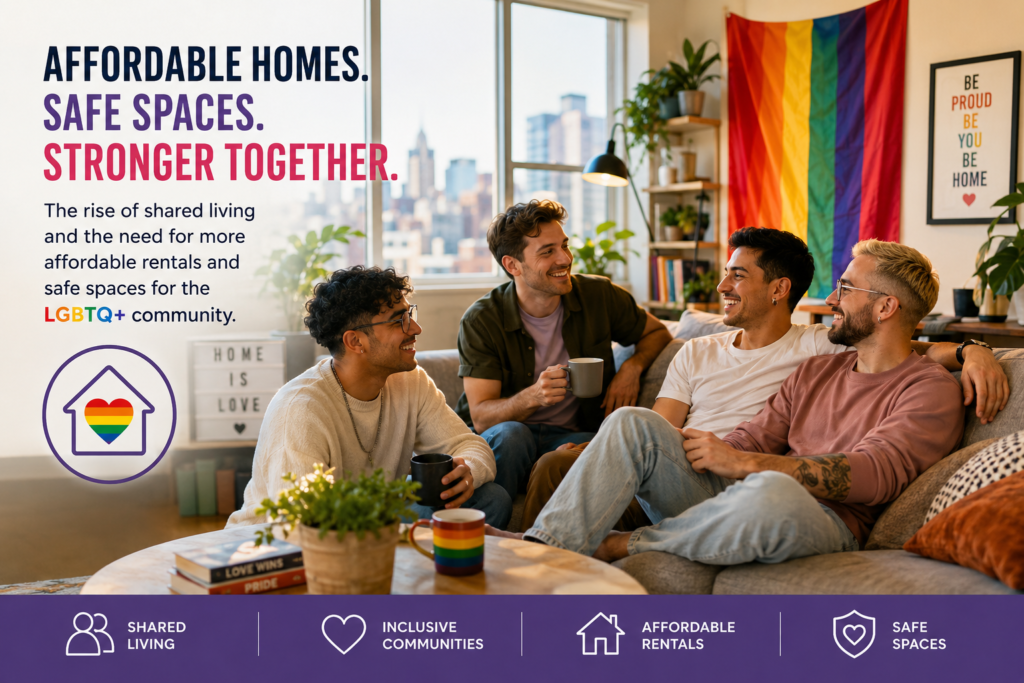
Finding a place to call home has become increasingly difficult for people across the country. Rising rents, limited housing inventory, higher living costs, and the growing gap between wages and housing expenses are changing the way people think about renting and living.
For many, shared living is no longer simply a temporary arrangement between roommates. It is becoming an important and practical housing option—and for the LGBTQ+ community, it can also provide something equally important: a chance to find housing in an environment where people feel accepted, respected, and safe.
The Growing Demand for Shared Living
The traditional idea of renting an apartment alone is becoming less realistic for many renters. As housing costs consume a larger portion of household budgets, sharing a home can provide a more affordable alternative.
Instead of paying the full cost of an apartment, renters can split expenses such as:
- Rent and security deposits
- Utilities and internet
- Household supplies
- Furnishings
- Other shared living expenses
Shared housing can also provide social benefits. Living with compatible roommates can reduce isolation, create friendships, and build a sense of community.
For young adults starting out, people relocating to a new city, individuals recovering from financial setbacks, or anyone simply looking for a more affordable place to live, finding the right roommate can make a significant difference.
Affordability Is Only Part of the Equation
While affordability is important, finding a place that is financially accessible doesn’t necessarily mean finding a place that feels like home.
For LGBTQ+ renters, the housing search can come with additional concerns.
A potential roommate may have different attitudes toward LGBTQ+ people. A landlord may not be supportive or welcoming. Someone searching for a room may worry about discrimination, harassment, or simply having to hide an important part of who they are in their own home.
Home should be a place where people can relax and be themselves—not somewhere they feel pressured to constantly evaluate whether it is safe to do so.
That is why LGBTQ+ inclusive housing isn’t just about finding an affordable room. It’s about creating opportunities to find housing where acceptance and respect are part of the equation.
The Importance of Safe and Inclusive Spaces
A safe living environment means different things to different people, but respect should be a basic expectation.
For LGBTQ+ renters, an inclusive roommate or housing community can mean being able to:
- Live openly and authentically
- Feel comfortable bringing a partner or friends home
- Avoid unnecessary judgment or discrimination
- Build relationships with people who understand their experiences
- Create a household based on mutual respect
- Feel connected to a broader community
This doesn’t mean every LGBTQ+ person wants to live exclusively with other LGBTQ+ people. Rather, it means people should have the ability to find housing environments where they feel comfortable and respected.
Roommates Are Becoming More Than a Financial Solution
The modern roommate relationship is evolving.
For many people, a roommate isn’t simply someone who helps pay the rent. They can become a friend, a source of support, a connection to a new city, or part of a chosen community.
That makes compatibility increasingly important.
People want to know more than how much a room costs. They may want to know whether a potential roommate is LGBTQ+ friendly, what their lifestyle is like, whether they work from home, whether they have pets, how they approach cleanliness, and what kind of household environment they want.
The better the match, the greater the chance that shared living becomes a positive experience for everyone involved.
Building Better Housing Connections
The future of shared housing isn’t simply about putting two people together because they can afford the same rent.
It is about creating better connections between renters, roommates, landlords, and communities.
Platforms designed specifically with LGBTQ+ renters in mind can help address this gap by bringing housing and community together in one place.
Instead of searching through endless listings and hoping a potential roommate is accepting, renters can look for housing opportunities that better align with their needs, preferences, and lifestyle.
For landlords, creating welcoming housing opportunities can also help connect them with renters who are actively looking for inclusive living environments.
A More Inclusive Future for Shared Housing
The housing challenges facing renters aren’t going away overnight. Affordable housing remains a major concern, and shared living will likely continue to play an important role in helping people manage the rising cost of housing.
But affordability shouldn’t have to come at the expense of safety, dignity, or belonging.
Everyone deserves the opportunity to find a home where they can feel comfortable being themselves.
For the LGBTQ+ community, creating more accessible pathways to affordable, inclusive housing can help turn shared living from a financial necessity into something much more positive: a way to build community, make connections, and find a place that truly feels like home.
Finding More Than a Room
At GayRoomies.net, the idea is simple: finding a place to live should be about more than finding four walls and a monthly rent.
It’s about finding the right connection.
Whether you’re searching for a room, looking for a roommate, offering a rental, or simply trying to find an LGBTQ+ friendly living environment, the goal is to make the housing search more welcoming, connected, and community-focused.
Because everyone deserves a place to call home—and everyone deserves to feel welcome there.
GayRoomies.net — Find your space. Find your people. Find your home.
